

We use cookies on this site to improve our service, perform analytics, and remember website preferences. By using this site, you consent to these cookies. For more information visit our Privacy Policy
Visualizing integrated care pathways for coordinated chronic conditions care
HHF partnered with the Frontenac Lennox & Addington Ontario Health Team (FLA OHT) to drive broader adoption of the OHT’s streamlined chronic conditions workflows. By clearly communicating how these workflows would increase access to care and improve patient outcomes, HHF helped build the understanding and buy-in needed for care providers across the region to implement them.
Client
Frontenac Lennox & Addington Ontario Health Team (FLA OHT)
Services
Communications Design, Process Mapping
Challenge
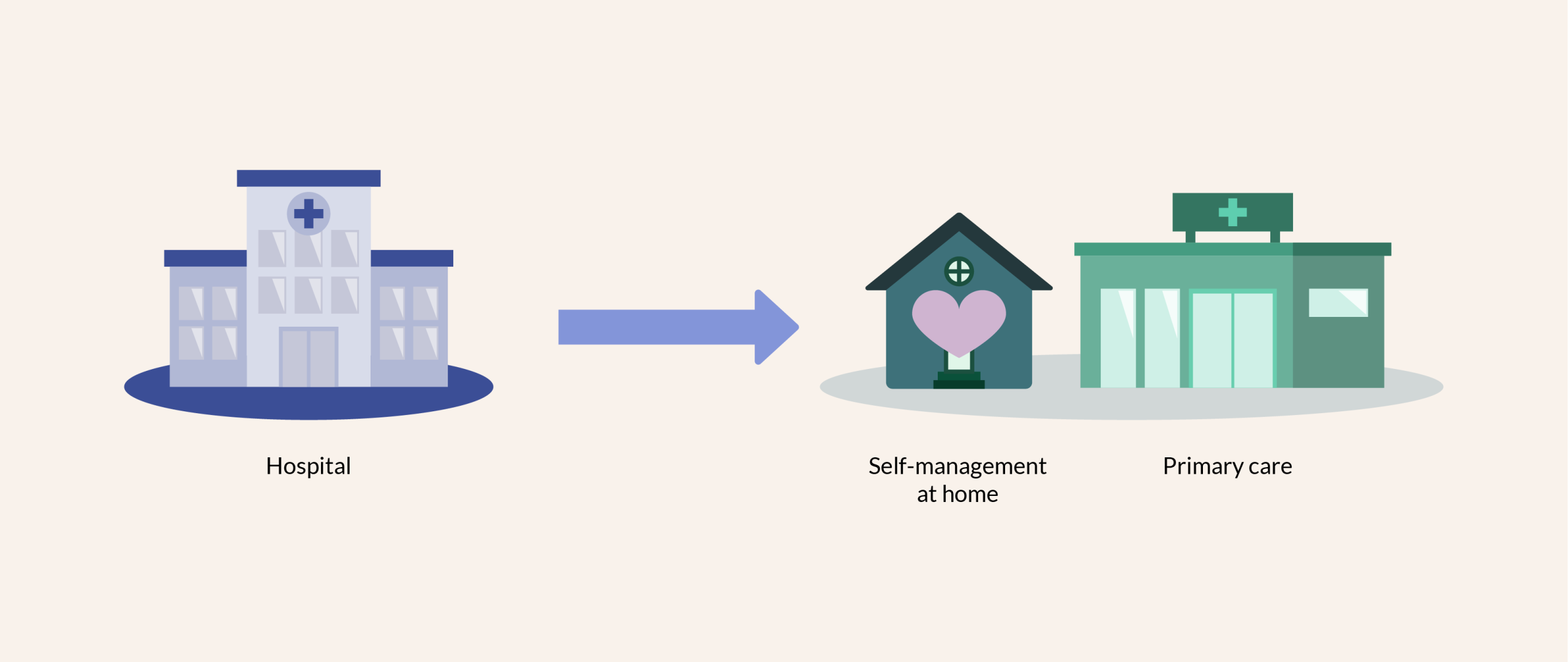
Ensuring access to healthcare for those who need it most is a key challenge for any publicly funded system. As the population of Ontario expands and ages, the Health Home & Neighbourhood framework, centred around tight integration between home, community, and hospital care—as well as physical, mental, and social wellness supports—has been adopted as the leading framework for maintaining a high quality and accessible system.
Building on the principles of a connected Health Neighbourhood, the FLA OHT developed a set of chronic conditions pathways: a type of collaborative workflow used to ensure that community care, primary care, and hospital care work collaboratively toward common goals. These pathways introduced many changes to practice that clarified team roles, reduced duplication of services, and improved communication between organizations to promote better health outcomes for people living with Congestive heart failure (CHF) and Chronic Obstructive Pulmonary Disease (COPD). Their strategies were working well at their pilot sites, but FLA OHT needed an effective way to encourage buy-in across the region.
HHF was engaged to help support broader understanding and uptake of these new chronic condition pathways so that the FLA team could scale them across the region. Our team worked with the OHT to prioritize, simplify, craft compelling messages, and develop engaging communication assets to help providers understand and participate in their strategy.
Process
We collaborated with the client team to assess their pathways and compare them to the current standard of care. We identified 18 key changes that providers needed to understand in order to deliver care in this new way. We also mapped each of the interventions to core pillars of the Health Neighbourhood model. Using content analysis and affinity mapping, the project team synthesized a summary of actions providers could take in their daily practice, as well as supports that would be available to them from the OHT, and sorted them into an easy to understand framework to support implementation.
Core Themes
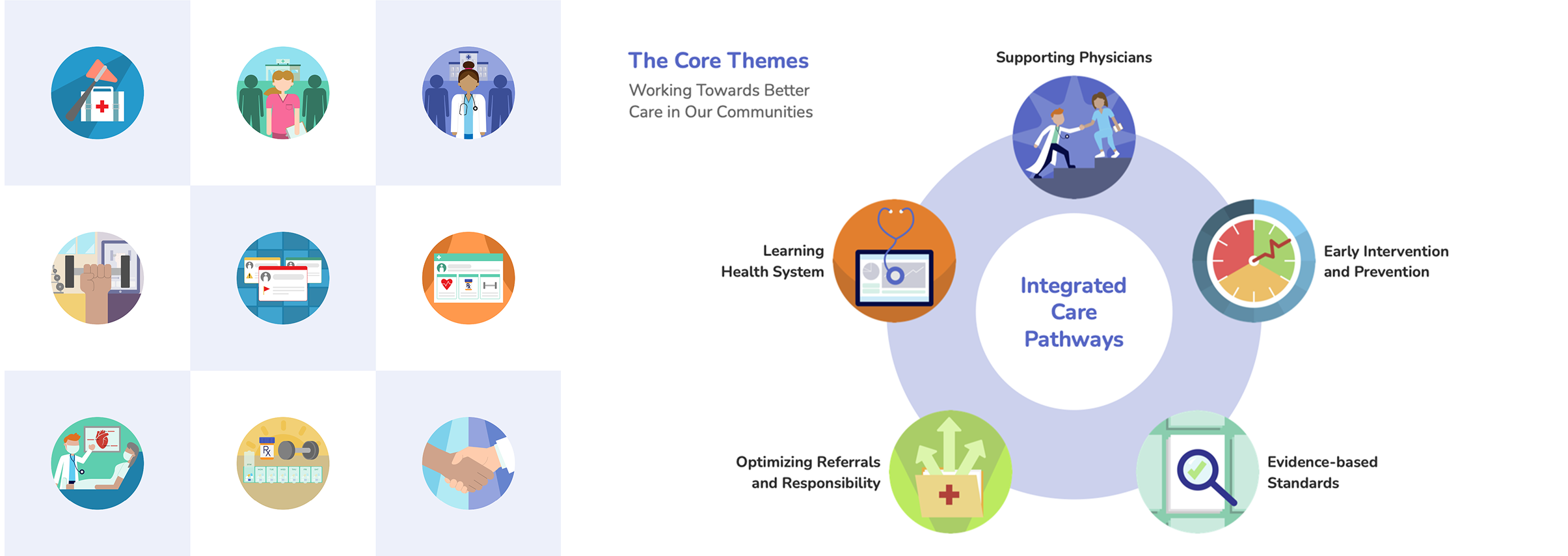
We categorized our findings into 5 core themes and identified 18 improvements, which were validated by FLA OHT’s advisory committee.
Supporting physicians
Strategies for building provider capacity, expanding the interdisciplinary workforce, and increasing team-based task-shifting. These efforts empower clinicians to use their time and expertise more effectively.
Early intervention and prevention
Proactive actions to help slow disease progression and avoid future exacerbations that could lead to hospital visits. These initiatives will help to reduce preventable strain on the health system.
Evidence-based standards
Guidelines to support consistent, high-quality clinical practices grounded in up-to-date knowledge. These workflows will enhance reliability and alignment across providers and care settings.
Optimizing referrals and responsibility
Ensuring consistently efficient navigation of patients to the most appropriate available provider. These strategies improve access and quality of care across the patient journey.
Learning health system
Use of data and evaluation to drive continuous improvement. These practices strengthen accountability, promote equity, and ensure care remains responsive to patient and provider needs.
Design
We then launched into visualization, bringing the information to life with educational maps, presentations, and illustrations. With feedback and guidance from the OHT, health system partners, and clinical leaders, our team refined these deliverables. The final documents clearly convey how providers can tailor care based on the best evidence, collaborate to coordinate care across health system partners, and adjust clinical workflows build capacity by optimizing health human resources.
Click here to view the full-sized map
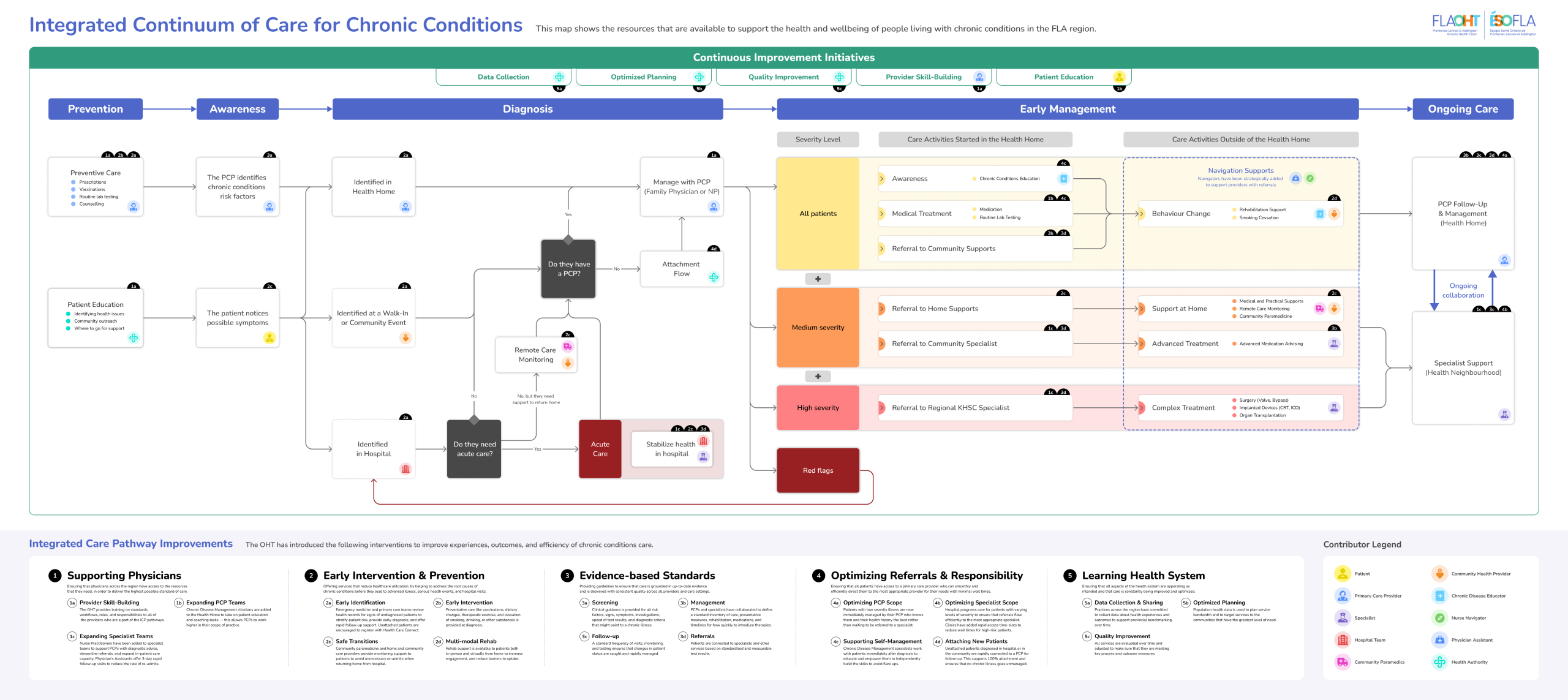
Our final overview map acts as an educational and decision-support tool for clinicians, showing the desired pathways and continuous improvement initiatives being developed for people living with CHF and COPD. It is divided into five phases: prevention, awareness, diagnosis, early management, and ongoing care. Each phase contains activities mapped to different health system roles and one or more of the 18 improvements to clarify how people can collaborate across settings to deliver excellent care for chronic conditions.
We also developed a presentation with custom illustrations for each theme and intervention to support marketing and communication objectives for different audiences — namely clinicians, government interest holders, and the public. The presentation provides a concise overview of the chronic condition pathways and what their impacts are for both providers and people in the community. It also incorporates the overview map as an educational resource and explains how the diagram can be read and used to support health outcomes.
Outcomes
These tools are key resources that support the FLA OHT in rolling out practice changes to new providers by helping them educate, build buy-in, and gather feedback. This initiative is one component of the FLA OHT’s broader Health Home & Neighbourhood strategy. This work will be expanded and adapted to support a broader range of health needs in the future.
Since the pathways launched in 2024, 116 providers and allied health professionals have received training, resulting in high patient enrolment and increased referral rates to Ontario Health at Home and Community Paramedics for home-based care. Ten Health Homes have been established across the region, with 18 additional sites provided with Best Care Support and two with embedded chronic disease nursing supports.
- 700+patients enrolled in each pathway since April 2025 (791 in CHF and 701 in COPD)
- 95.5%referral rate achieved for eligible patients to Ontario Health at Home
- 18individuals referred to Community Paramedics by the KHSC HF Clinic for the Hospital at Home program