

We use cookies on this site to improve our service, perform analytics, and remember website preferences. By using this site, you consent to these cookies. For more information visit our Privacy Policy
Reimagining access through a human-centred Social Medicine Hub
HHF partnered with the UHN Social Medicine team to collaboratively design a model of care for a new physical space that could better connect patients to care, social supports, and community services.
Client
UHN Social Medicine Program
Services
Human-centred research, service design, model of care development, spatial experience design
Challenge
Social Medicine patients often engage with healthcare systems to meet unmet social needs including food, shelter, safety, and connection, rather than strictly medical concerns. However, traditional healthcare environments are not designed to adequately respond to these realities and welcome this population.
Underserved patients frequently encounter barriers such as complex registration processes, fragmented services, systemic biases, and environments that feel unwelcoming or unsafe. At the same time, care teams face challenges navigating siloed systems, unclear pathways, and limited resources to provide holistic support.
Working with Social Medicine at UHN, we had the opportunity to envision what a new kind of access point might look and feel like; one that could integrate care, reduce barriers, and better reflect the realities of peoples’ lives.
The Guiding Principles
The design of the Social Medicine Hub was grounded in principles drawn from research, lived experience, and program values:
Embed anti-oppressive and anti-racist approaches that respect individual autonomy, ensuring people have the power to share their voices and the dignity to make informed choices.
Build trusting, reciprocal relationships by centring the lived experiences of individuals and communities, ensuring care is empathetic and responsive to their realities and needs.
Acknowledge and respect diverse cultural identities, traditions, and experiences, tailoring care to honour and integrate each person’s unique background.
Address the social determinants of health by focusing on the whole person, recognizing their dignity, strengths, and aspirations.
Discovery
HHF conducted interviews, shadowing, and engagement sessions with patients, people with lived experience, security personnel, community health workers, clinicians, and system partners. This work explored lived experiences, care journeys, and gaps across the current Social Medicine model.
Co-Design
Through collaborative workshops, stakeholders co-created personas, mapped journeys, and identified opportunities to improve access, coordination, and experiences of care. This included exploring how a Hub space could support both patients and staff.
Synthesis and Design
Insights were translated into guiding principles, opportunity areas, and a comprehensive model of care, including a detailed visualization of the patient journey, care delivery, staffing model, and spatial experience.
What We Learned
- Often what drives Social Medicine patients to engage with medical spaces are their non-medical needs
- The concept of “registration” can be a barrier for many Social Medicine patients
- Above all, Social Medicine patients want to be seen and treated as humans with dignity, autonomy, and choice
- When Social Medicine patients do require medical support it can be challenging to fully meet their needs
- The social determinants of health (SDoH) are not well understood or assessed
- Awareness of what Social Medicine is and does remains limited
The Solution
Through extensive co-design and engagement we created a holistic model of care that offered a new front door to the healthcare system for people who had historically been excluded or underserved.
The model integrates four core elements:
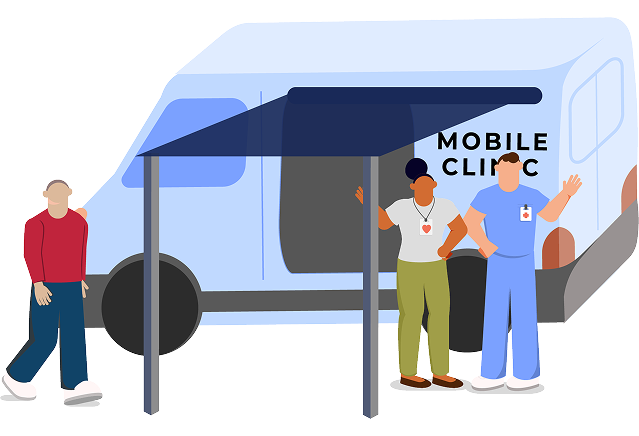
Redefining access to care
Low-barrier, non-judgmental entry points that prioritize trust, flexibility, and immediate needs such as food, warmth, and basic medical care.
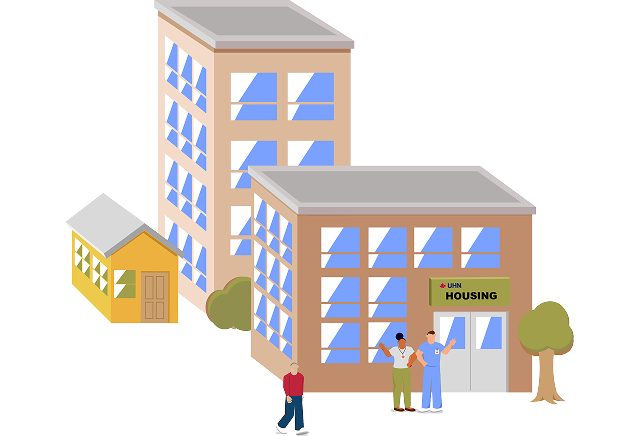
Spotlighting whole-person care
Care that recognizes the full context of a person’s life, including social determinants of health, cultural needs, and the importance of human relationships.
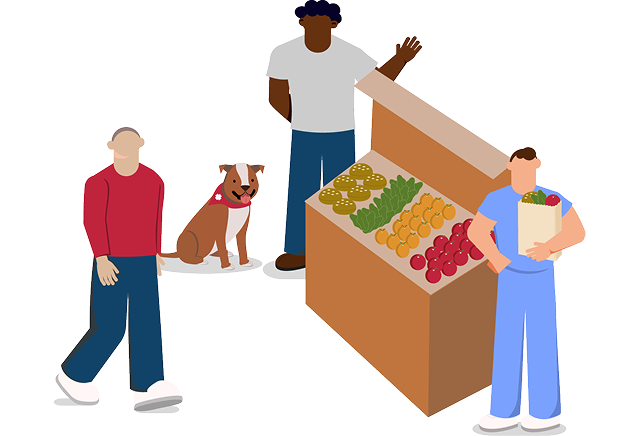
Expanding awareness
Clearer pathways into the Social Medicine program, improved understanding across teams, and proactive community engagement.
Strengthening collaboration
A shared space that brings together hospital teams, community partners, and peer support workers to deliver coordinated, person-led care.
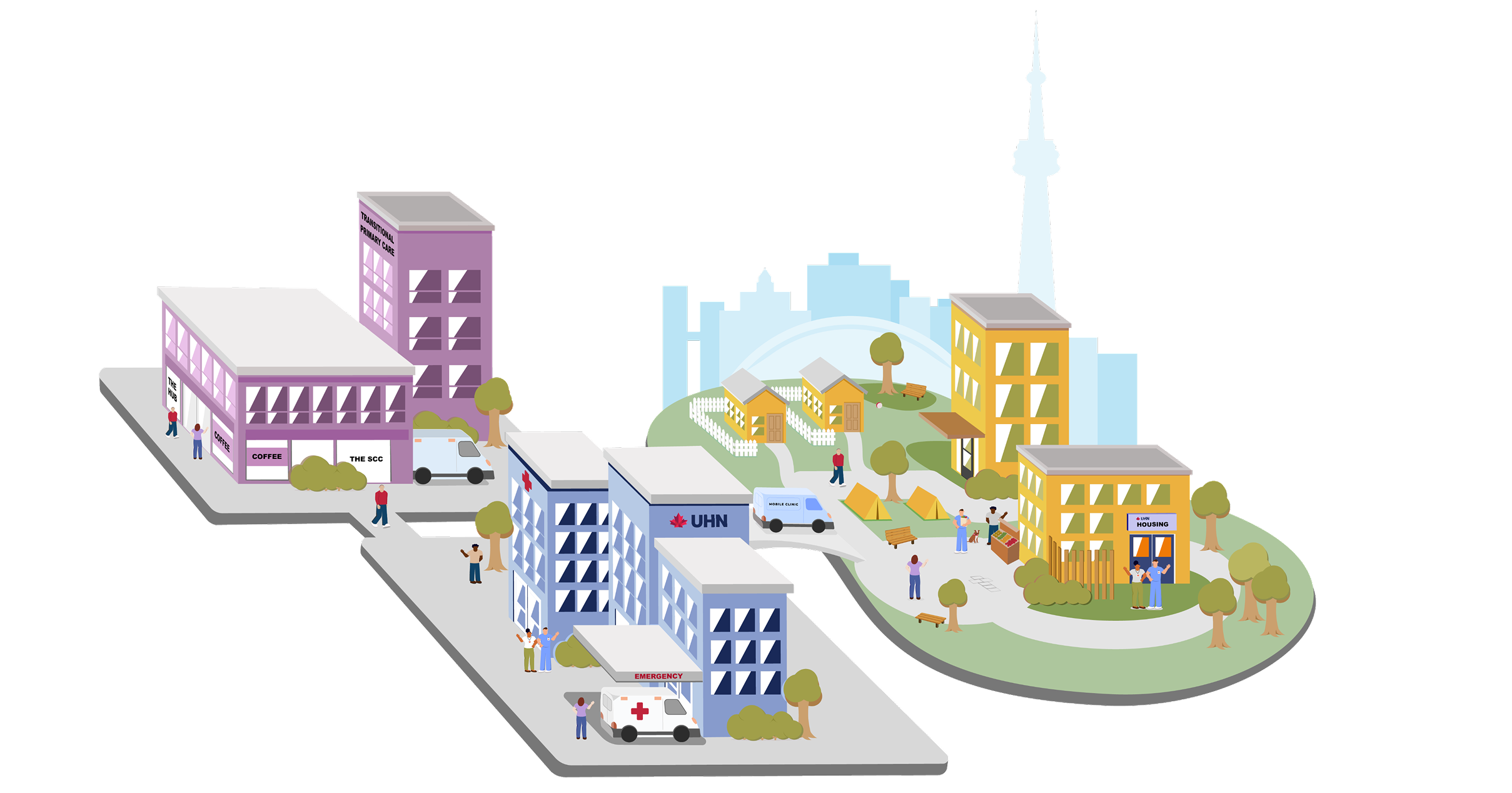
The Social Medicine Hub Model of Care illustrates an approach to the delivery of health care services within the Social Medicine Hub space that supports patients, care providers, and staff all within a flexible and adaptable space.
Patient Experience
A flexible, trust-based journey that supports autonomy, privacy, and ongoing engagement.
Care delivery
Integrated medical, social, and community services delivered through a team-based model.
Staff Experience
Safe, supported environments that enable staff to build relationships and deliver high-quality care.
Physical Space
A welcoming, non-medicalized environment designed for flexibility, cultural safety, and sensory needs.
Using an interactive model, participants were able to co-design their ideal space.